 Reviews


 Proudly American


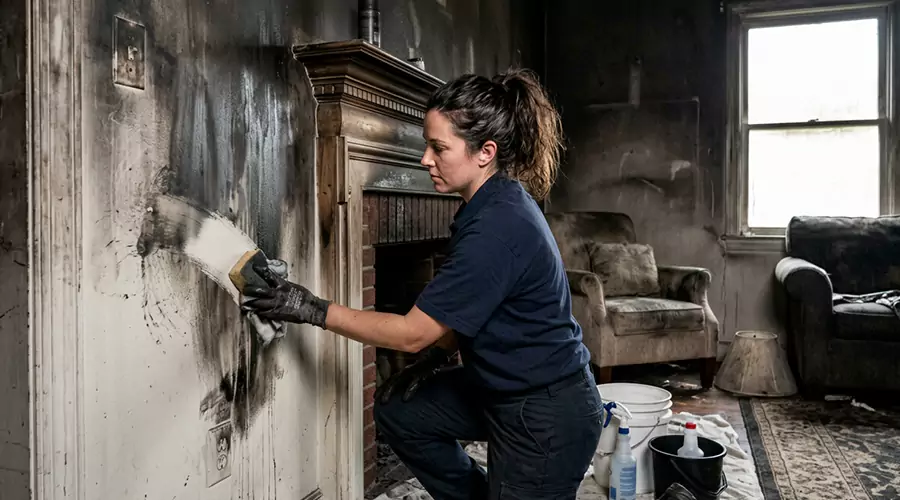
Smoke damage is the residue and odor left when combustion particles spread through a home during or after a fire. It can affect walls, ceilings, furniture, fabrics, HVAC components, and hidden cavities even when flames never reach those areas. Smoke and water damage restoration can address smoke-related residue and odors along with water damage that may occur during firefighting.
Fine smoke particles travel with moving air and can settle far from the flames.
What Does Fire Residue Look Like?
Fire residue can appear as black soot or gray film. Some fires produce oily residue while others leave fine dry particles.
Common signs include:
- Dark marks above doors
- Gray film on walls
- Soot around air registers
- Staining on ceilings
- Persistent smoky odor
- Oily residue on cabinets
- Discolored fabrics
- Fine particles on shelving
Why Does Smoke Spread Beyond the Fire Area?
Smoke rises with hot air and can move through door gaps or duct openings. A small kitchen fire can therefore affect nearby rooms.
| Smoke Path | Possible Effect |
|---|---|
| Open doorways | Residue in nearby rooms |
| HVAC pathways | Particles near vents |
| Ceiling level | Heavy upper-wall staining |
| Cabinet gaps | Trapped odor |
| Fabrics | Persistent smell |
The affected area is often wider than the visible burn zone.
How Does Smoke Affect Walls and Ceilings?
Walls and ceilings collect soot as particles settle. Painted drywall can also absorb odor when exposure is heavy. Smoke damage on walls may range from a light gray film to oily black staining. Cleaning should begin with loose soot removal because adding moisture too early can smear residue into the finish. Ceiling residue can be harder to notice under low light.
Can Smoke Affect Drywall?
Yes. Drywall can hold smoke odor because its paper facing is porous. Heavy residue or heat damage can make replacement more practical.
Drywall concerns become more serious when:
- The paper facing is charred.
- Odor returns after cleaning.
- Firefighting water soaked the panel.
- Soot appears through both sides.
- The board feels soft.
- Mold develops after water exposure.
Painting should wait until soot has been removed and the drywall has dried.
How Does Smoke Affect Furniture and Fabrics?
Porous furnishings can trap smoke deeper than hard surfaces. Upholstery may continue releasing odor after ventilation. Hard furniture may need only careful cleaning when the finish remains intact. Fire residue can remain after visible soot is gone. Source cleaning works better than masking odor.
Can Smoke Affect the HVAC System?
Smoke can reach HVAC components and collect on filters. Running a contaminated system can redistribute residue.
Look for:
- Dark residue around supply registers
- Smoke odor when the system starts
- Dirty filters after the fire
- Soot inside accessible vent covers
- Odor that appears in several rooms
What Types of Smoke Cause Different Damage?
Smoke residue varies with the material that burned. Dry soot can be powdery while oily smoke tends to smear.
| Residue Type | Common Behavior | Cleaning Concern |
|---|---|---|
| Dry soot | Fine and powdery | Spreads when brushed |
| Oily residue | Sticky or greasy | Smears during wet cleaning |
| Protein residue | Light visible staining | Strong persistent odor |
| Mixed smoke | Combination of residues | May need several methods |
What Warning Signs Mean Smoke Is Hidden?
Hidden contamination often becomes obvious after visible surfaces are cleaned. Odor may return when the home stays closed overnight.
Watch for these signs:
- Smoke smell returns after ventilation.
- Cabinets smell stronger when opened.
- Soot appears around vents.
- Fabrics smell after washing.
- Wall stains return after cleaning.
- Attic insulation smells smoky.
- Several distant rooms have odor.
- Clean surfaces collect gray residue again.
- Odor gets stronger when HVAC runs.
- Smoke smell remains inside closets.
What Can You Check Yourself?
A white-cloth test can identify loose residue on accessible hard surfaces.
Check:
- The top of a door frame.
- A cabinet exterior.
- A wall outside the fire room.
- An accessible vent cover.
Gray or black transfer indicates residue is still present. Close a cleaned room for several hours. Returning odor suggests that source cleaning has not reached every affected material.
When Should You Call a Professional?
Professional assessment is appropriate when smoke affects several rooms or enters the HVAC system. It is also useful when odor remains after repeated cleaning or when structural materials were burned.
Consider help when:
- Heavy soot covers large surfaces.
- Smoke odor keeps returning.
- HVAC components show contamination.
- Insulation is affected.
- Drywall is charred or wet.
- Electrical components were exposed.
- The cleanup boundary is unclear.
Professional smoke damage cleaning may use different methods for dry soot and oily residue.
How Can You Limit Further Contamination?
Limit further damage by keeping soot from spreading into clean areas.
Useful steps include:
- Keep affected rooms separated.
- Avoid running a dirty HVAC system.
- Bag heavily contaminated disposable items.
- Clean tools before changing rooms.
- Remove loose soot before wet washing.
- Keep smoky fabrics away from clean belongings.
Conclusion
Smoke residue can affect much more of a home than the area touched by flames. Fine particles can settle on walls or enter fabrics while odor remains inside porous materials. Start by identifying where residue traveled and avoid smearing loose soot during cleanup. If smoke reaches HVAC components or several rooms, professional assessment can help define how far the contamination extends.
Frequently Asked Questions
Can fire residue cause problems without visible soot?
Yes. Some smoke residues leave strong odor with limited visible staining.
Can fire residue become harder to remove over time?
Residue can become harder to remove as it settles or reacts with finishes. Early source cleaning usually reduces this problem.
Can smoke permanently damage walls?
Severe heat or deep contamination can require replacement. Light surface residue can often be cleaned when the wall remains sound.
Why does smoke odor return after cleaning?
Odor can remain inside upholstery or wall cavities that were not fully cleaned.
Can smoke travel through air vents?
Yes. Smoke can enter HVAC pathways and settle around registers or filters.
Is smoke residue the same as soot?
Not exactly. Soot is one type of residue while smoke contamination can also include odor that is not visibly black.